
Some rooms feel effortless the moment you walk in — balanced, calm, everything in its place. Others feel subtly wrong in a way that’s hard to name. More often than not, the difference isn’t the colour palette or the furniture itself. It’s scale and proportion: how big things are, and how they relate to the space and to each other.
Scale and proportion are the quiet architecture of a beautiful room. Get them right and everything else has a chance to shine. Get them wrong and even the most expensive pieces will feel awkward.
The most common proportion mistakes
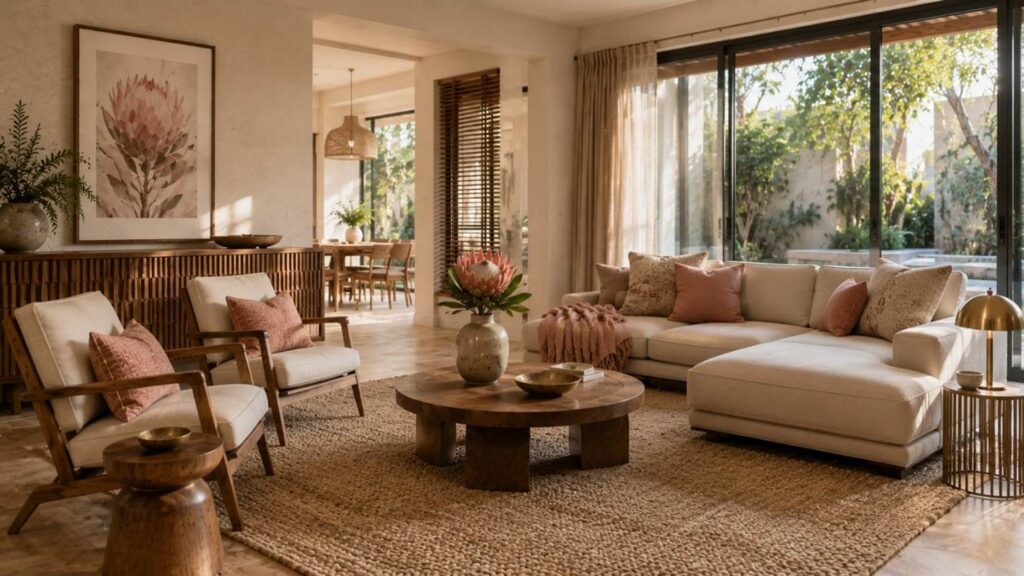
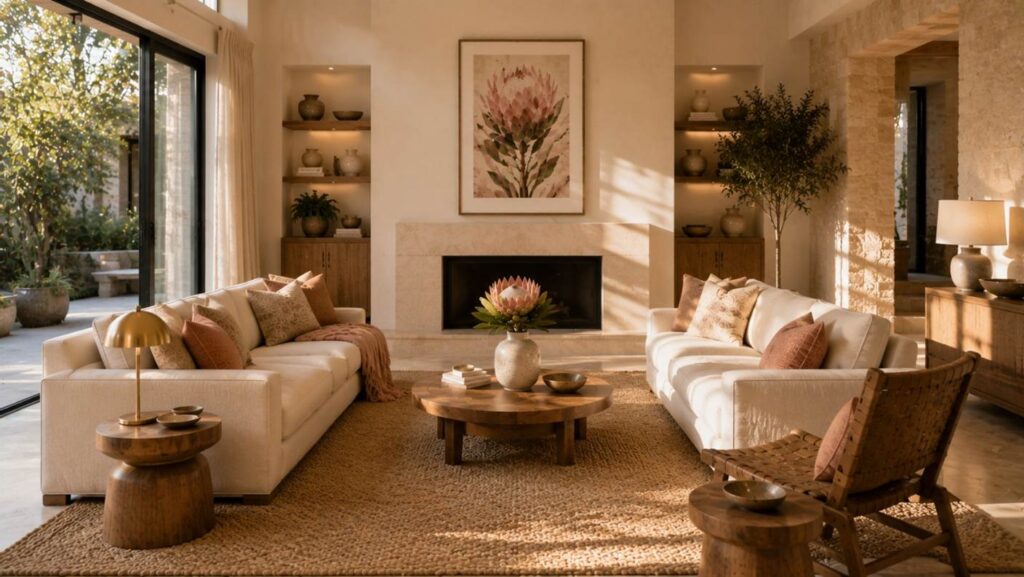
The classic error is a rug that’s too small. A rug that floats in the centre of a seating area, with all the furniture legs off it, makes the whole arrangement feel adrift. As a rule, the front legs of your sofa and chairs should sit on the rug — it visually ties the group together and instantly makes the room feel larger and more intentional.
Next is furniture that fights the room. An oversized sectional in a modest lounge leaves no room to move; a dainty sofa in a large, high-ceilinged space looks lost. The goal is visual weight that matches the volume of the room.
And then there’s spacing. Too little space and a room feels cramped; too much and it feels cold and disconnected. Around 45 centimetres between a sofa and coffee table is the sweet spot — close enough to reach, generous enough to pass. Walkways want roughly 75–90 centimetres to feel easy.
How to get proportion right
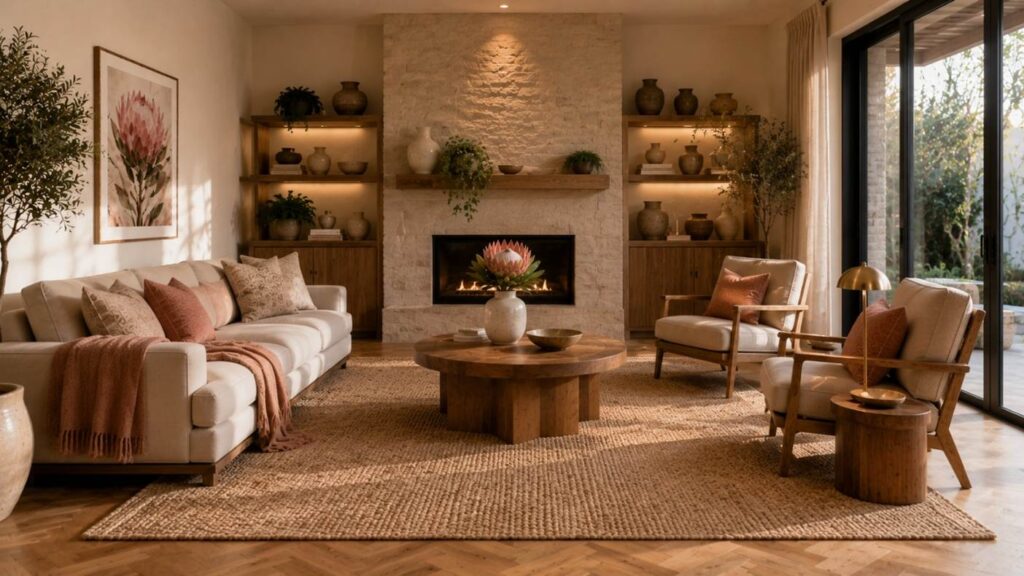
Start by measuring — the room, the doorways, and the empty space you want to keep around each piece. Proportion is as much about negative space as it is about the furniture. Use painter’s tape on the floor to map footprints before you buy anything; it’s the cheapest design tool there is.
Why it matters
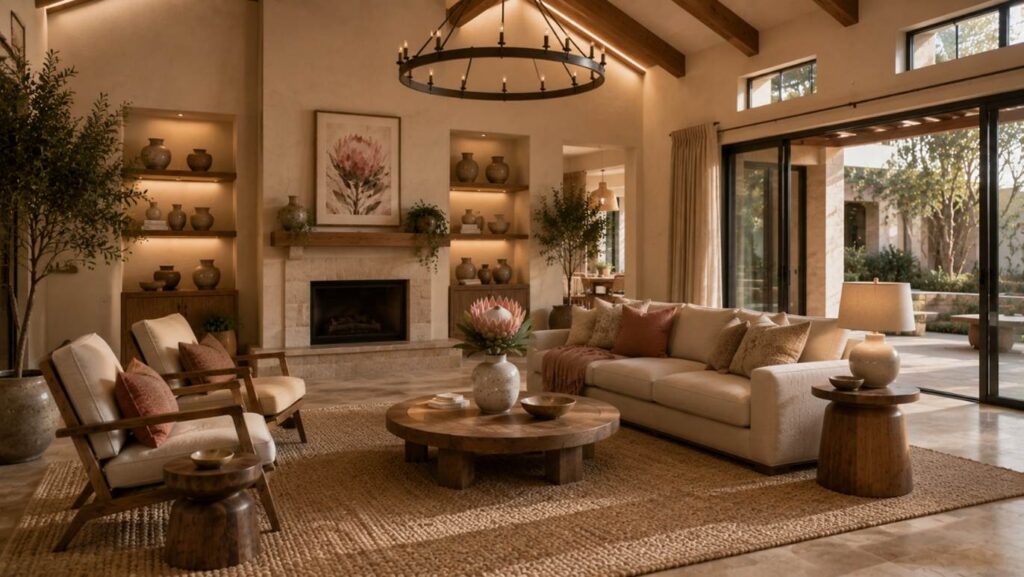
Proportion is what separates a room that’s merely furnished from one that feels designed. It’s invisible when it’s right and impossible to ignore when it’s wrong. Master it, and you can work with almost any style, budget, or palette and still create a space that feels harmonious, generous, and calm.
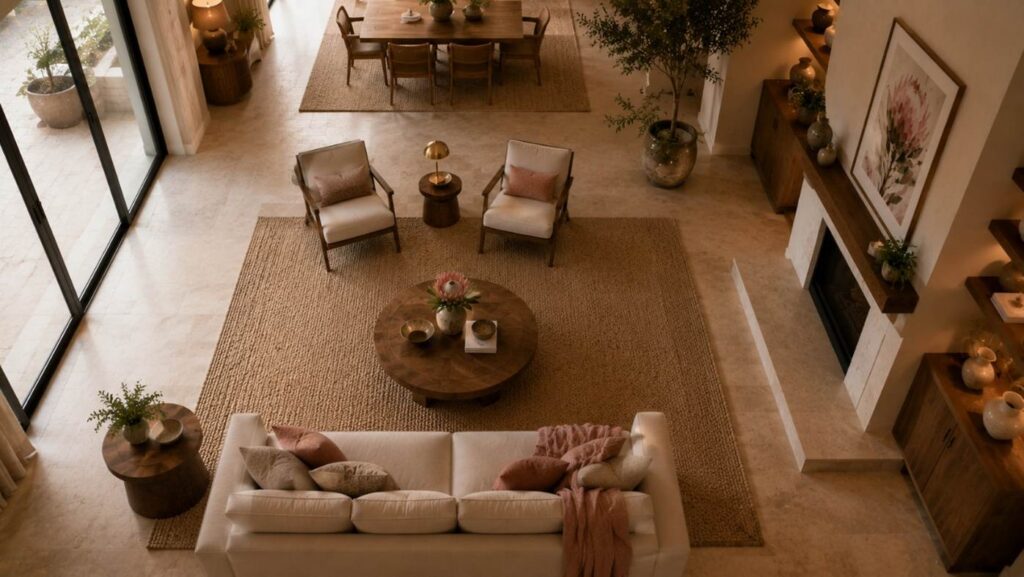
The best part? Once you learn to see scale, you can fix most “off” rooms without spending a cent — just by editing, spacing, and rearranging what’s already there.
Follow @kpd.designstudio on Instagram for room-by-room proportion tips.