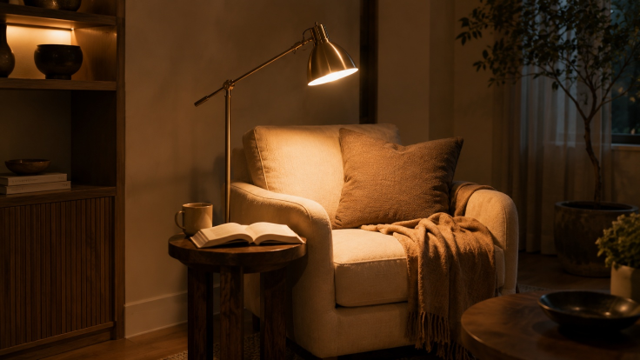
Have you ever stepped into a room and felt instantly at ease — the light soft, the mood warm, everything somehow right — without being able to say why? Nine times out of ten, the answer is lighting. And more specifically, layers of it.

The most common lighting mistake is relying on a single overhead fixture to do everything. One light source, however lovely, flattens a room. It casts hard shadows, leaves corners gloomy, and gives a space nowhere to breathe. The fix is to think in layers.

Layer one: ambient light

Ambient light is your foundation — the general, overall illumination that lets you move through a room comfortably. Ceiling fixtures, recessed downlights, and larger pendants usually do this job. Think of it as the base coat: necessary, but rarely the star. The goal is a soft, even wash of light with no harsh hot spots. A dimmer here is one of the best investments you can make, letting the same room shift from bright and functional by day to low and intimate by night.

Layer two: task light

Task light is exactly what it sounds like — light for doing things. A reading lamp beside an armchair, pendants over a kitchen island, a well-placed lamp on a desk. Task lighting is practical, but it’s also where a room starts to feel considered, because it responds to how you actually live. Position it close to the activity and at the right height, so it illuminates the task without glaring into the eyes.

Layer three: accent light

Accent light is where the magic happens. This is the layer that adds drama and depth — a picture light over art, an uplight grazing a textured wall, a small lamp glowing in a far corner, the flicker of candles. Accent lighting isn’t about function; it’s about feeling. It draws the eye, creates shadow and contrast, and gives a room that collected, layered glow that photographs beautifully and feels even better in person.

Bringing the layers together

The art is in the balance. Start with ambient for comfort, add task where you live and work, then finish with accent to create atmosphere. Put as many sources as you can on dimmers, and aim for pools of warm light at different heights rather than one bright ceiling. A room lit this way gains something a single fixture can never provide: depth, warmth, and a sense of quiet luxury.

Layered light is one of the simplest changes with the most transformative results — and once you start seeing rooms in layers, you’ll never light one flatly again.Follow @kpd.designstudio on Instagram for more design guides like this.