
Proportion is the first decision, not the last
The single most common mistake is choosing a rug that’s too small for the room. A small rug floating in the middle of a large seating area makes the whole arrangement look under-furnished, regardless of how good the furniture itself is.
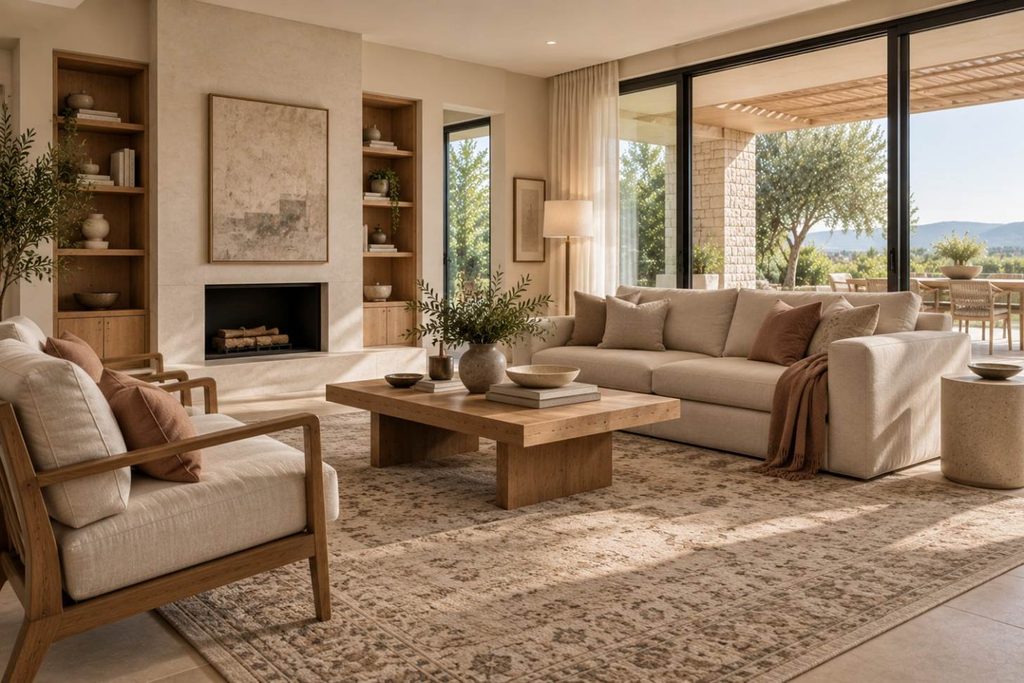
The principle we work from: in a living room, at least the front legs of every major seating piece — sofa, armchairs — should sit on the rug. This ties the furniture grouping together visually, rather than leaving it to float above a rug that reads as a separate, smaller element.
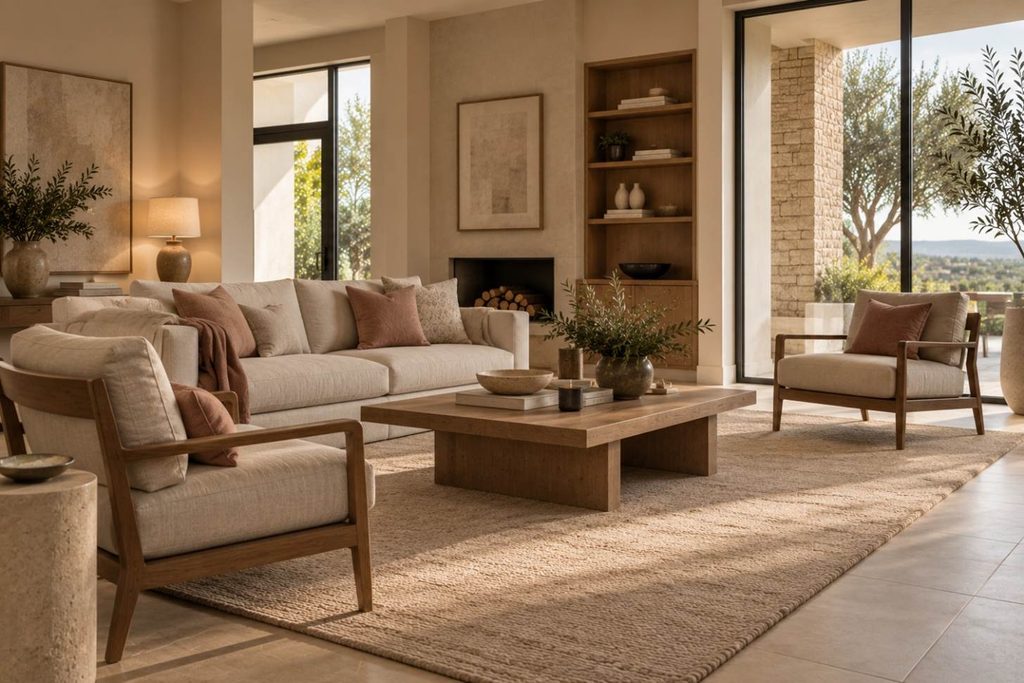
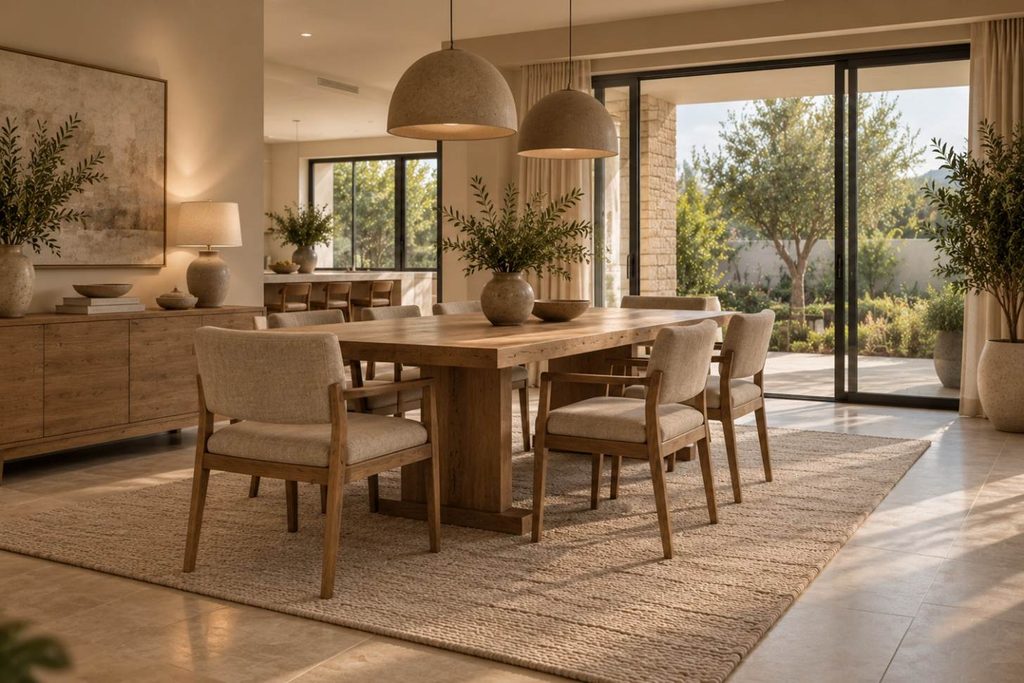
In a dining room, the rug needs to be large enough that the chairs stay on it even when pulled out from the table. A rug that ends where the chair legs land the moment someone sits down will catch on the chair legs constantly — a practical problem as much as a visual one.
Placement changes the feel of a room more than people expect
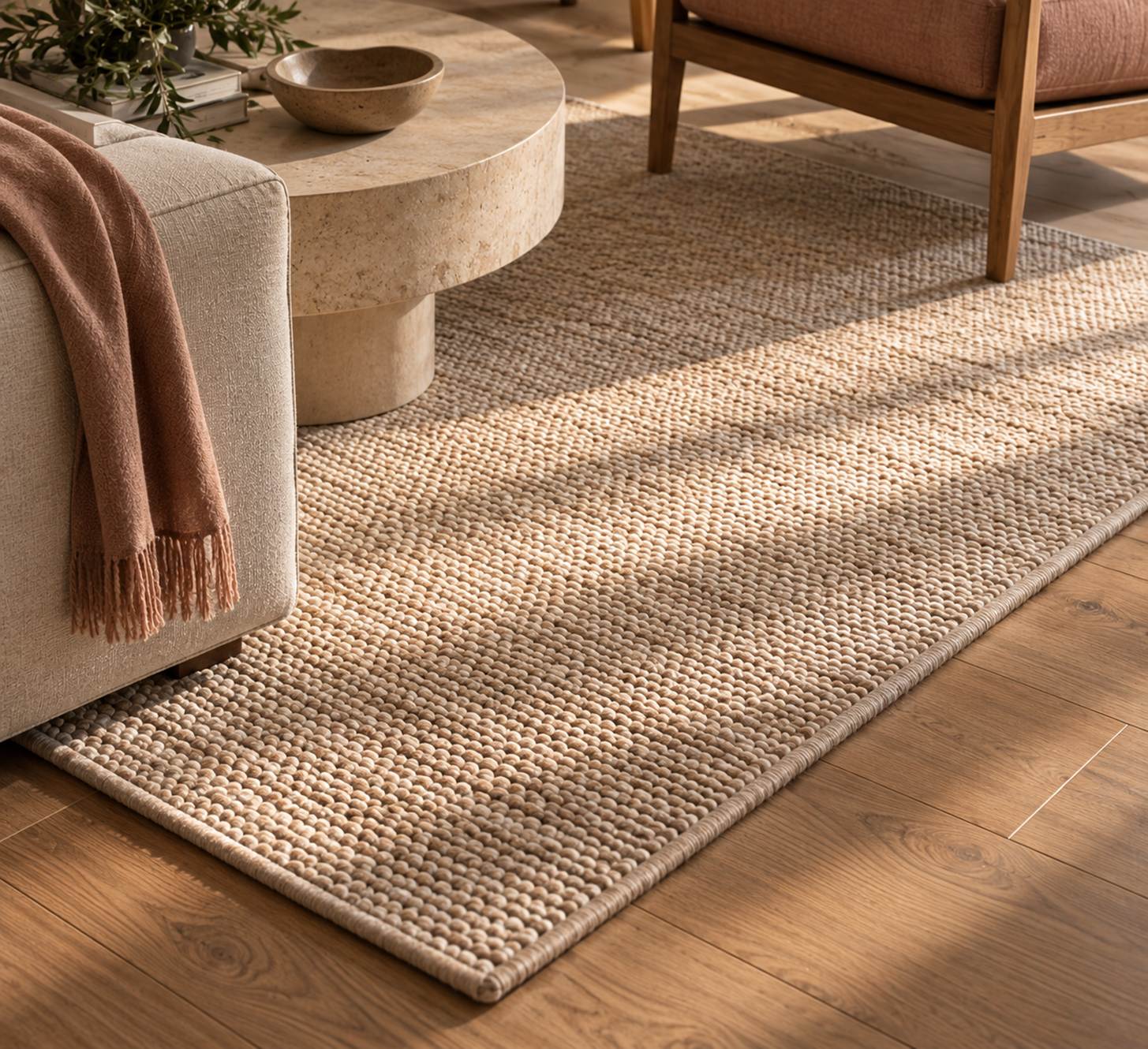
- Centred under the main furniture grouping, not centred in the room itself. A room is rarely a symmetrical box with furniture placed dead centre, so the rug should follow the furniture’s logic, not the room’s raw dimensions.
- Leaving a consistent border of floor visible around the edges — generally 20 to 40cm, depending on the room’s size. Too little border and the rug looks like it’s trying to be wall-to-wall carpet. Too much, and it looks stranded.
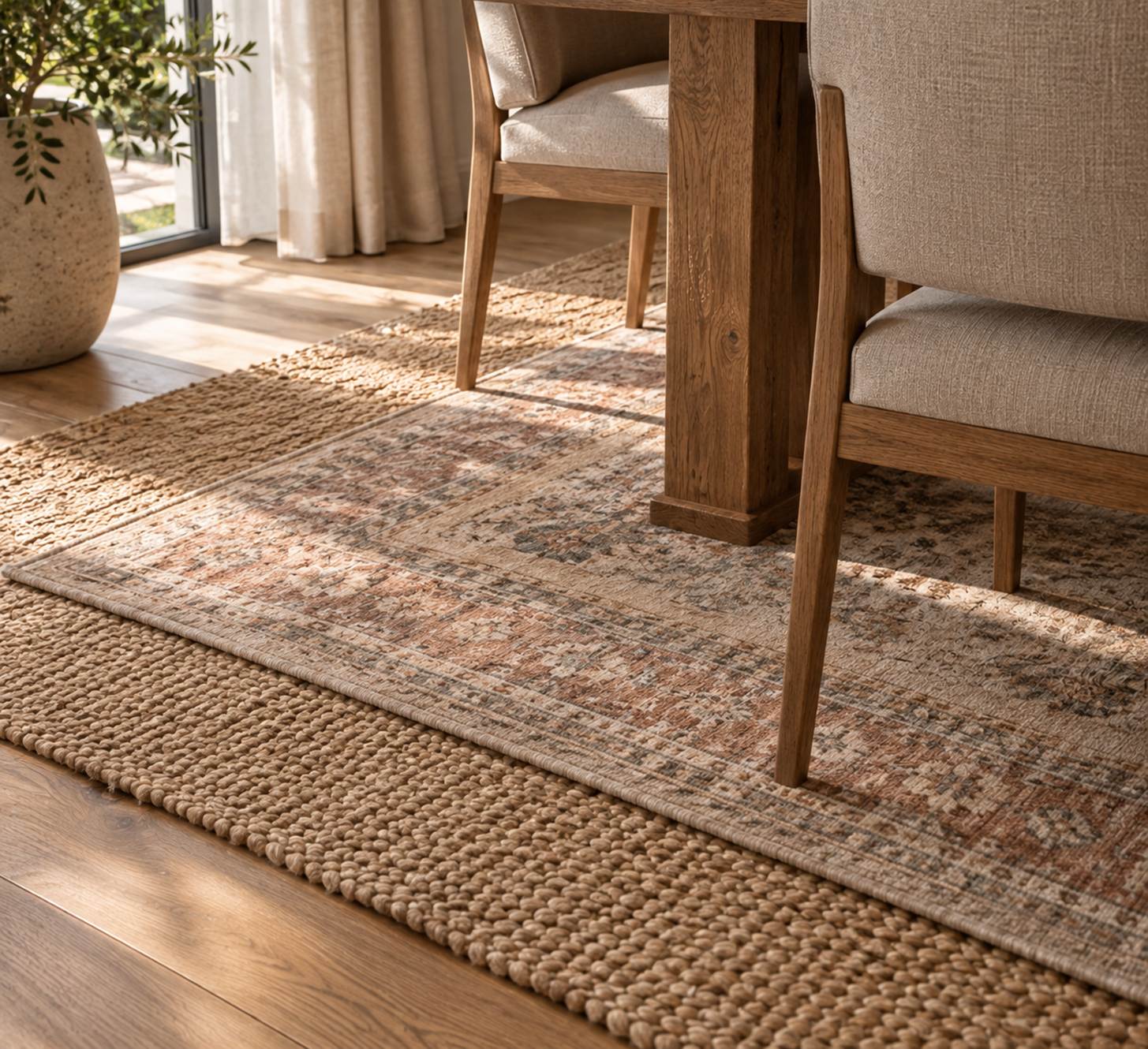
- Layering two rugs — a larger neutral jute or sisal base with a smaller patterned rug on top — is a technique worth considering in larger rooms, where a single rug large enough to anchor the whole space would otherwise need to be enormous, or expensive, or both.
Pattern is where restraint pays off
A patterned rug can do real work in a room — introducing colour, texture, and a sense of history that a plain rug can’t. But it needs to be the one graphic element doing that work, not one of several.
If the rug has pattern, let the upholstery stay largely solid. If the room already has a patterned sofa, wallpaper, or a bold piece of art, a plain, textured rug will hold the room together far better than a second competing pattern.
Neutral, textural rugs — wool, jute, a subtle weave — are also simply more durable choices for the long term. They don’t date the way a strongly trend-led pattern can, and they’re easier to build a room around later if the rest of the palette changes.
A quick reference before you buy
- Measure the actual seating grouping first, not just the room. The rug needs to fit the furniture arrangement, not the four walls.
- For a living room, aim for at least the front legs of major seating on the rug — ideally all four legs, budget allowing.
- For a dining room, allow roughly 60–70cm of rug beyond the table’s edge on all sides, so chairs stay on the rug when pulled out.
- Choose pattern intentionally, and let it be the room’s one graphic statement, not one of several.
The takeaway
A rug is a proportion decision before it’s a style decision. Get the size and placement right, and the room holds together. Get it wrong, and no amount of styling elsewhere will fully compensate.
| Follow King Protea Design for more — Julie shares practical design principles like this one, and the reasoning behind KPD’s project choices, on Instagram. instagram.com/kpd.designstudio |