
The entryway is usually the smallest room a designer works with, and the most overlooked. By the time most homeowners get to it, the budget and the attention have both gone elsewhere — into the kitchen, the living room, the main bedroom. The entryway gets whatever’s left.
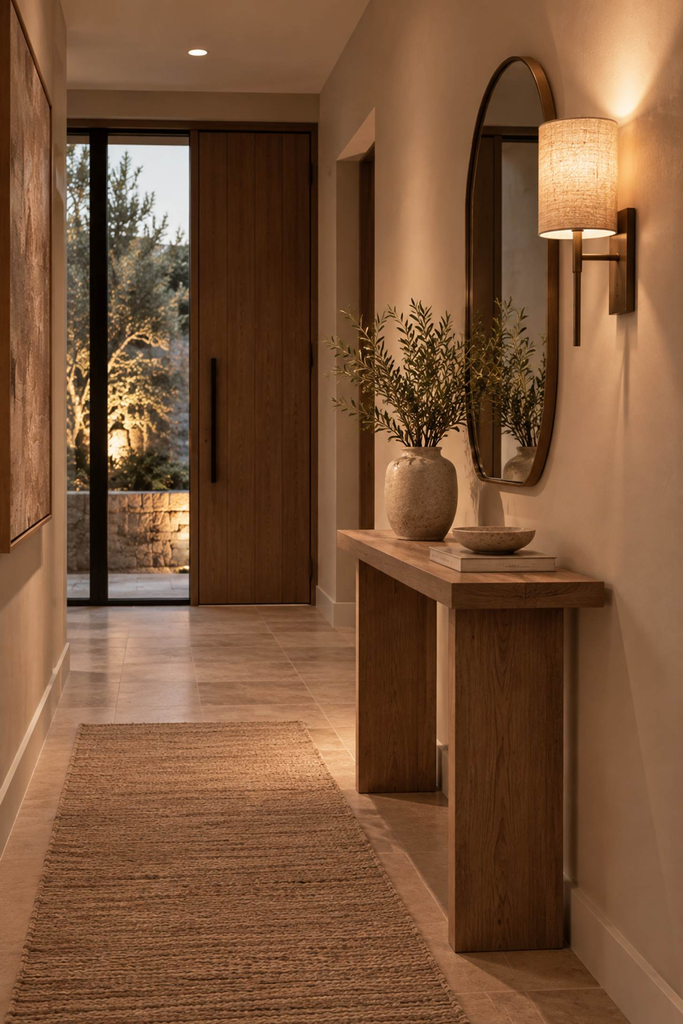
That’s a missed opportunity. An entryway isn’t just a transition space. It’s the first physical impression of a home, and it sets an expectation for everything that follows it. A considered entryway tells a guest something about the home before they’ve seen another room. A neglected one does the same thing, just in the opposite direction.
Why proportion matters before anything else
Most entryways are narrow, and the instinct is often to fill that narrowness with furniture — a console table, a bench, a rug, all fighting for the same limited floor space. The result usually feels cramped rather than welcoming.
The better approach is to let the proportion of the space dictate what goes in it, not the other way around. A narrow entry might only have room for a slim shelf and a single hook, and that restraint is often what makes it feel calm rather than crowded. A generous entry can carry more — a bench, storage, a considered light fixture — but even then, the goal is to give each element room to be seen, not to fill every available surface.
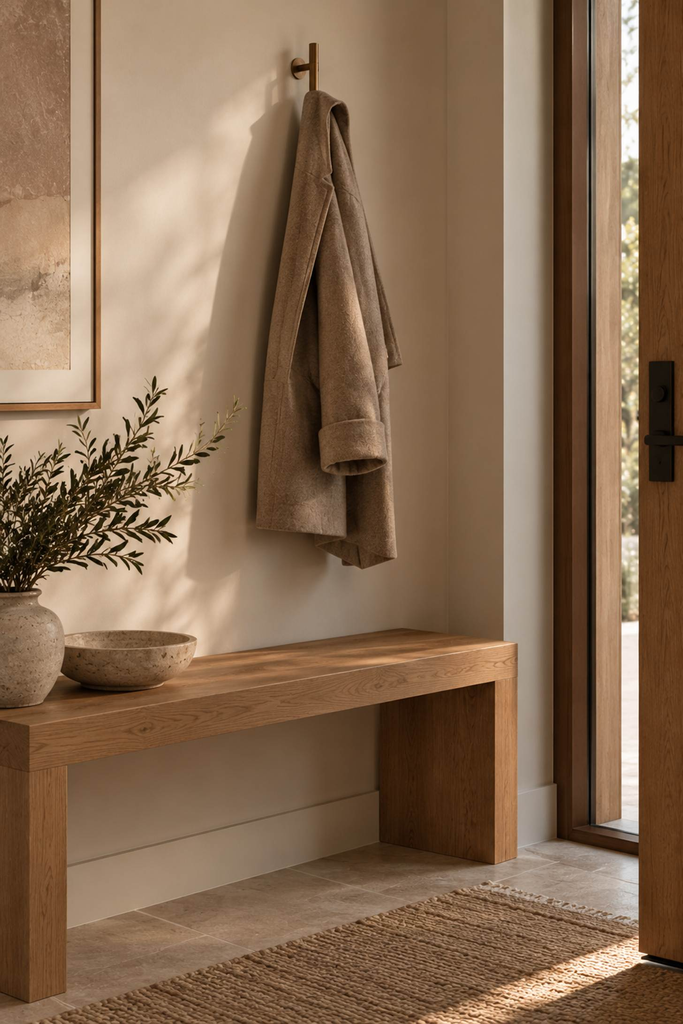
Light does more work here than in almost any other room
Entryways are frequently the darkest part of a home — no external windows, no natural light source, just whatever spills in from adjoining rooms or a front door. This makes lighting design more important here than almost anywhere else, not less.
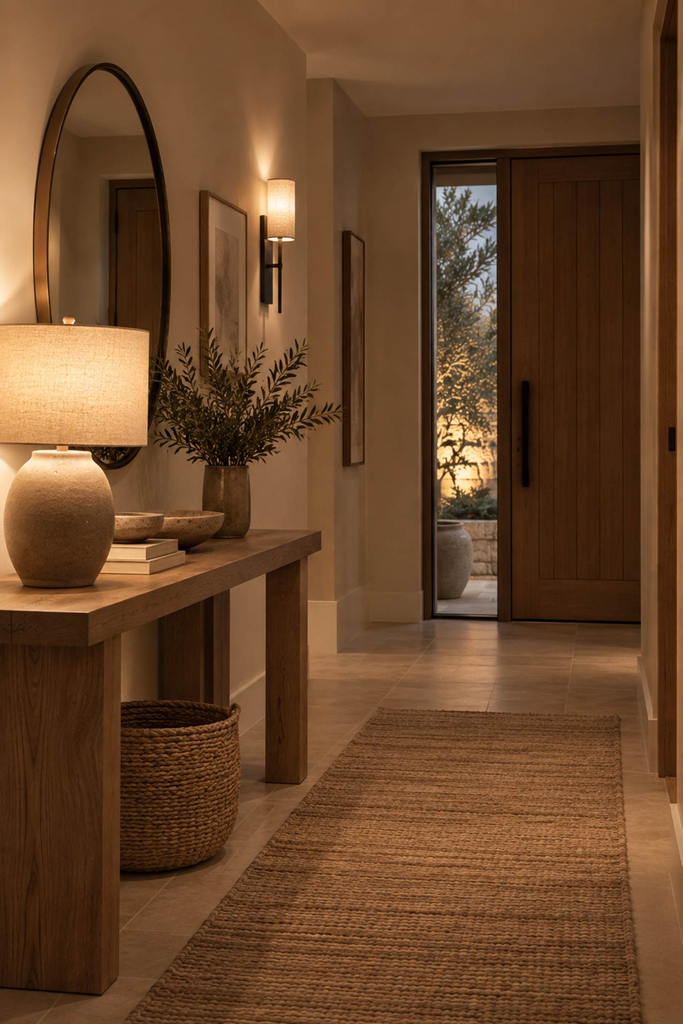
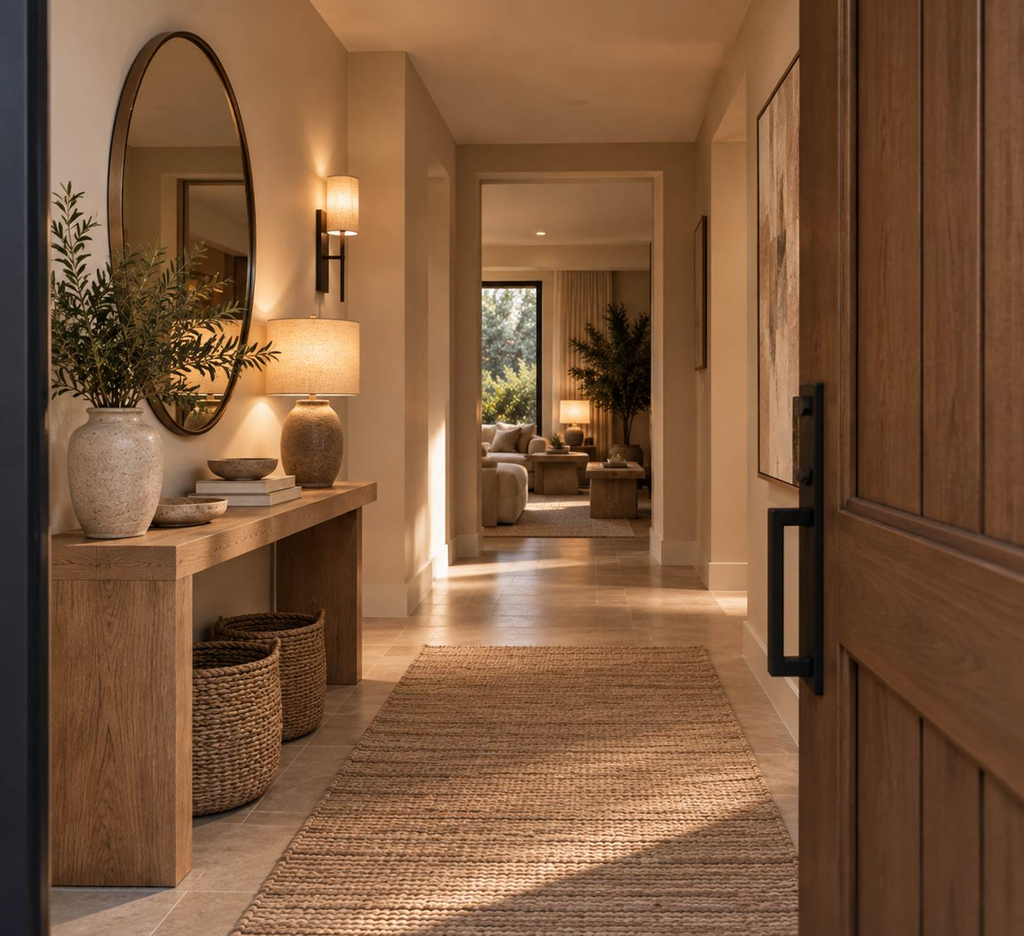
A single overhead fixture rarely does the job on its own. Layering a warm ambient light with a secondary source — a wall sconce, a lamp on a console table — creates the kind of welcoming glow that a single bright bulb can’t replicate. The goal is warmth, not brightness. An entryway that’s clinically lit feels like a waiting room. One that’s warmly lit feels like an invitation.
Scent is the detail almost no one designs for
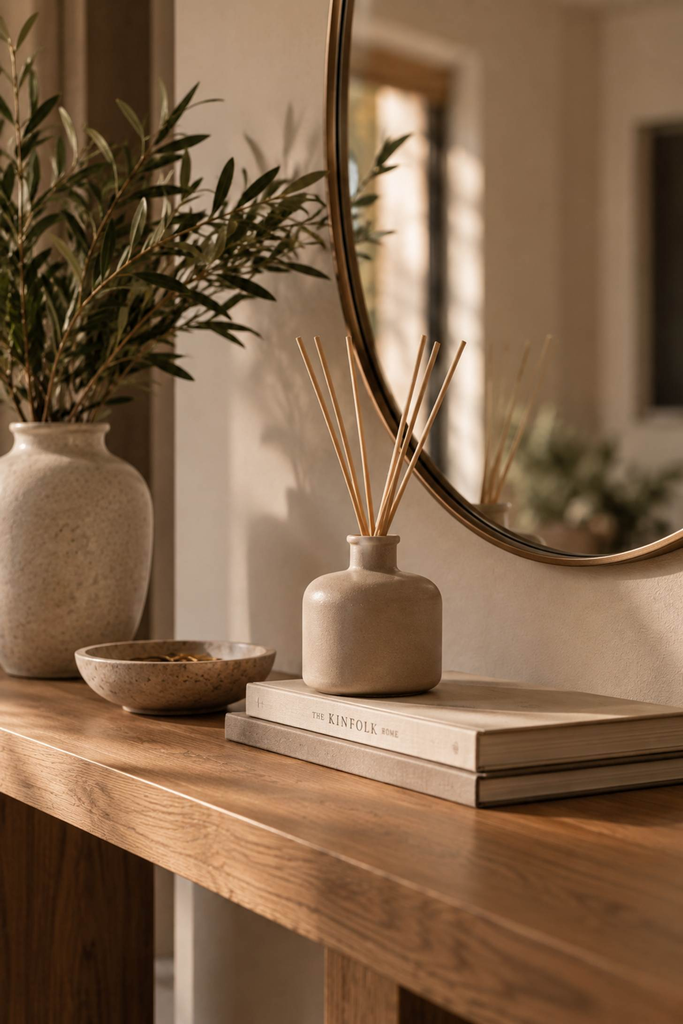
This is the one people forget entirely, and it’s worth remembering: scent is one of the fastest ways a space registers with someone, often before they’ve consciously taken in anything visual. A neutral, considered scent — not overpowering, not synthetic — does quiet work that no amount of styling can replace.
This doesn’t need to be complicated. A simple reed diffuser or a candle, chosen once and kept consistent, becomes part of a home’s identity in the same way a signature colour palette does. Consistency matters more than intensity here.
What we actually look at in an entryway
- Is there somewhere for a guest to put down keys, or set a bag, without needing to walk further into the home first?
- Does the lighting feel warm, or does it read as functional and clinical?
- Is the floor covering durable enough for daily wear, without sacrificing the tone of the rest of the home?
- Is there a single considered detail — a piece of art, a mirror, a well-chosen scent — that gives the space a sense of arrival, rather than just a sense of passing through?
The takeaway
An entryway doesn’t need to be large to be well designed. It needs proportion that respects the space it actually has, light that’s warm rather than merely functional, and a detail or two — visual or otherwise — that makes arriving feel considered. First impressions are made quickly, and they’re made here.
| Follow King Protea Design for more — Julie shares the reasoning behind entryways, layouts, and the small details that shape how a home feels on Instagram. instagram.com/kpd.designstudio |