
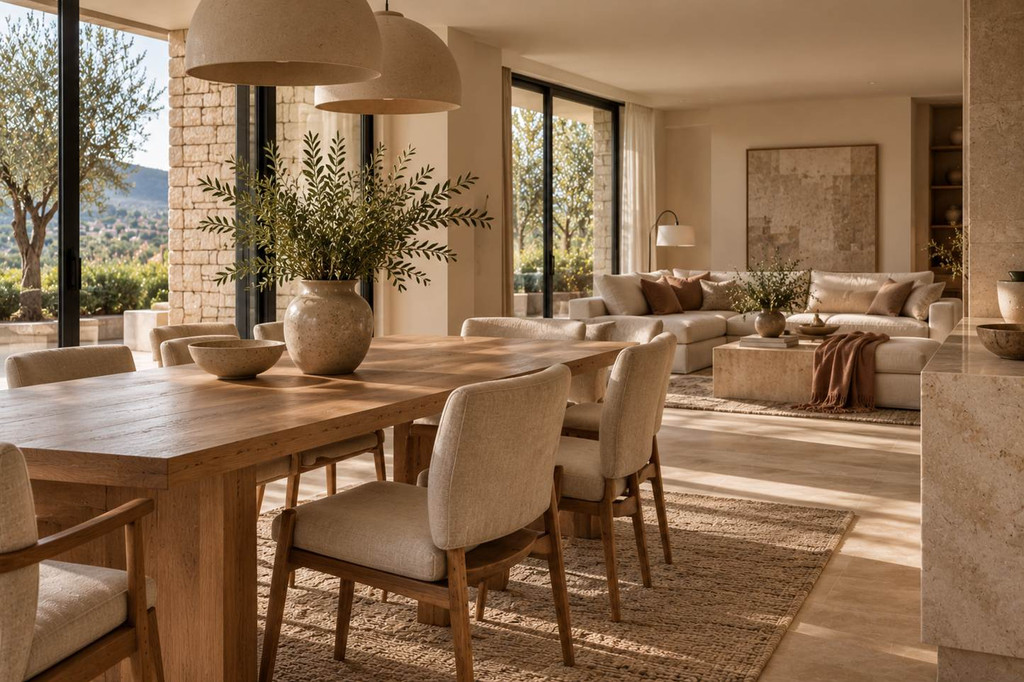
A room rarely needs more than one thing to look at first.
“Statement piece” is often misunderstood. It gets read as louder, bigger or more expensive. In our work, it means something quieter: the one piece that gives a room its centre of gravity.
Everything else in the room is there to support it.
What a statement piece actually does
A good statement piece gives the eye a place to land. It sets the tone for the materials and colours around it. And it tells anyone who walks in how the room is meant to feel.
When three or four pieces compete for attention, none of them wins. The room feels busy, even when it is perfectly tidy.
Start with how the room is used
Before choosing anything, ask what the room is for.
- A dining room gathers people, so the table or the pendant above it is the natural anchor.
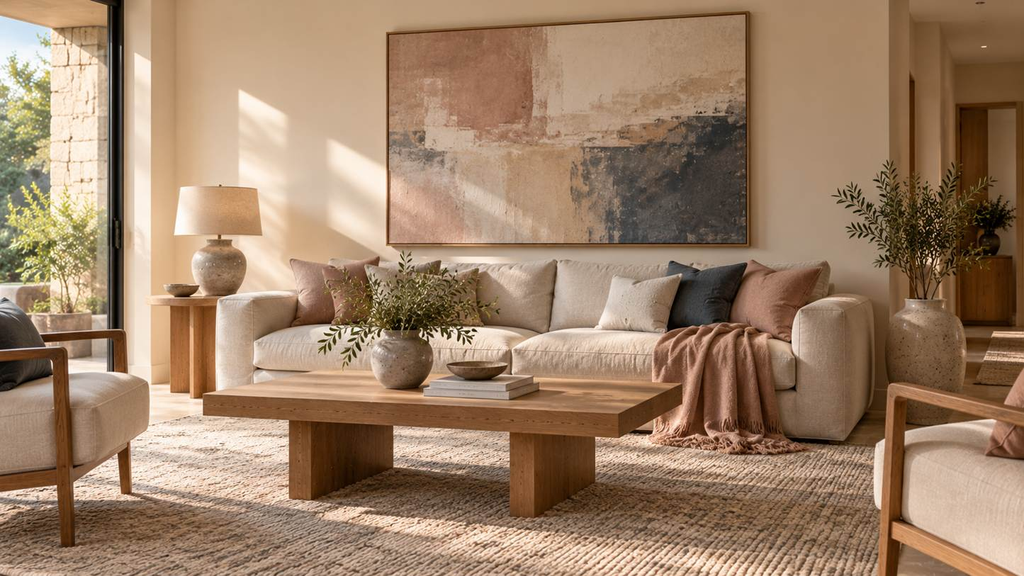
- A living room is for rest, so the anchor might be the sofa, a fireplace surround or a single artwork.
- A bedroom is for quiet, so the headboard wall usually leads.
The piece should earn its place through use, not only through looks.
Choose by material, not by volume
The pieces that last are rarely loud. They are interesting up close.
A solid timber table with visible grain. A hand-thrown ceramic lamp. A stone side table with softened edges. A wool rug with real depth underfoot.
Material carries character quietly. It also ages well, which is the real test of any piece you intend to keep.
Get the scale right
- A pendant over a dining table should be roughly half to two-thirds of the table’s width.
- Art above a sofa works best at around two-thirds of the sofa’s width.
- Leave clear space around the piece. It needs room to breathe to be seen.
Too small, and it reads as an afterthought. Too large, and it crowds the room.
Let everything else step back
Once the piece is chosen, the rest of the room supports it. Keep surrounding colours within the same family. Repeat one of its materials elsewhere: the timber tone in a frame, the stone in a tray. Hold back on accessories nearby.
“There is confidence in the calm.” — Julie Chrisopoulos
A room that trusts one good decision feels more assured than one that tries to impress from every corner.
Invest where it matters
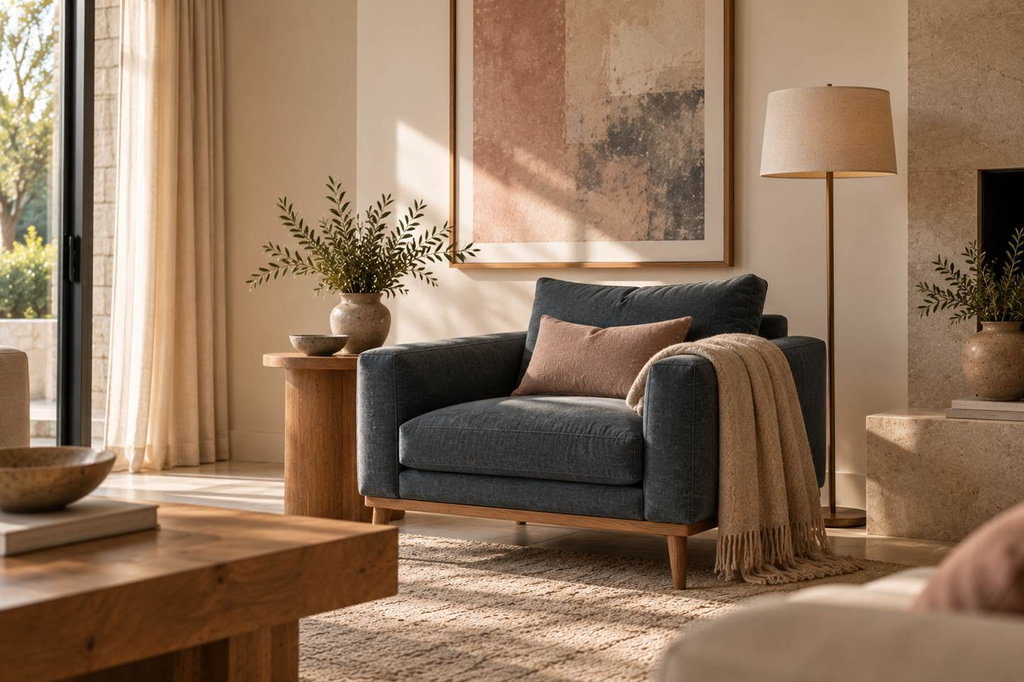
A statement piece is usually where the budget should go. It is seen, touched and used every day. One well-made piece will serve you better than several that don’t last.
Ask yourself one question: will I still want this in ten years? If the answer is yes, you have likely chosen well.
A quick checklist
- Does it suit how the room is actually used?
- Is the material honest and well made?
- Is the scale right for the space?
- Does it have room to breathe?
- Will it still feel right in ten years?
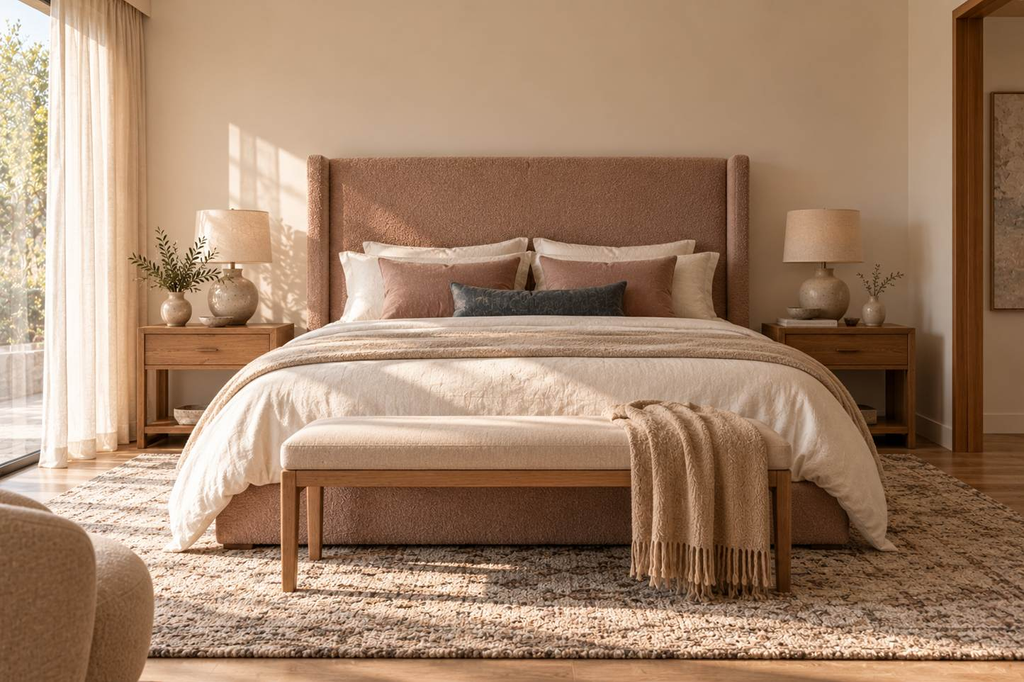
A home doesn’t need many statement pieces. It needs one good decision per room, and the discipline to let it lead.
I share how we anchor rooms in real homes on Instagram at @kpd.designstudio. Which room in your home is missing its centre?