
Why placement matters more than the piece
A room without art can feel unfinished, but a room with art in the wrong place can feel worse — off-balance in a way that’s hard to name but easy to sense. Most people notice something is wrong before they notice why.
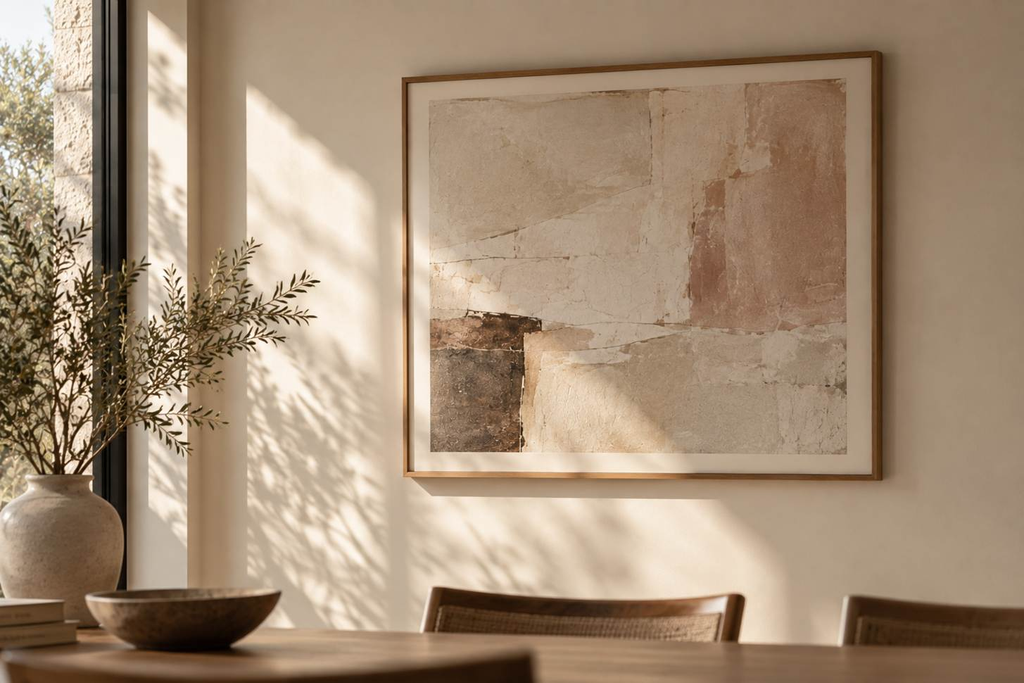
The reason usually comes down to one of a few things: the piece is hung too high, it’s disconnected from the furniture beneath it, or it’s fighting other elements in the room instead of working with them. None of these are about the art’s quality. They’re about its relationship to the space around it.
The principles we work from
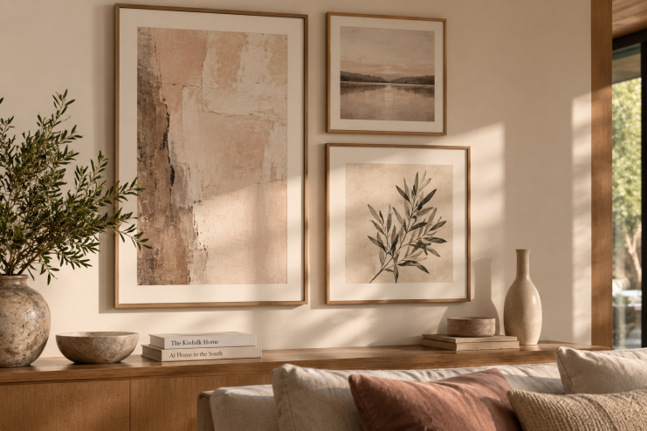
- Eye level means seated eye level in living spaces. The common rule of hanging art at 145–150cm from the floor assumes people are standing. In a living room, where people mostly sit, that’s often too high. Art should relate to the room as it’s actually used.
- Scale relative to the furniture below it, not the wall. A large sofa needs a piece — or a considered grouping of pieces — with enough presence to visually anchor it. A small, isolated frame above a long sofa tends to look stranded, regardless of how good the piece is on its own.
- Rhythm comes from repetition and variation, not matching sets. A single striking piece can carry a room. A grouping needs a common thread — a colour, a frame tone, a subject — with enough variation in scale and spacing that it doesn’t read as a matched set bought together.
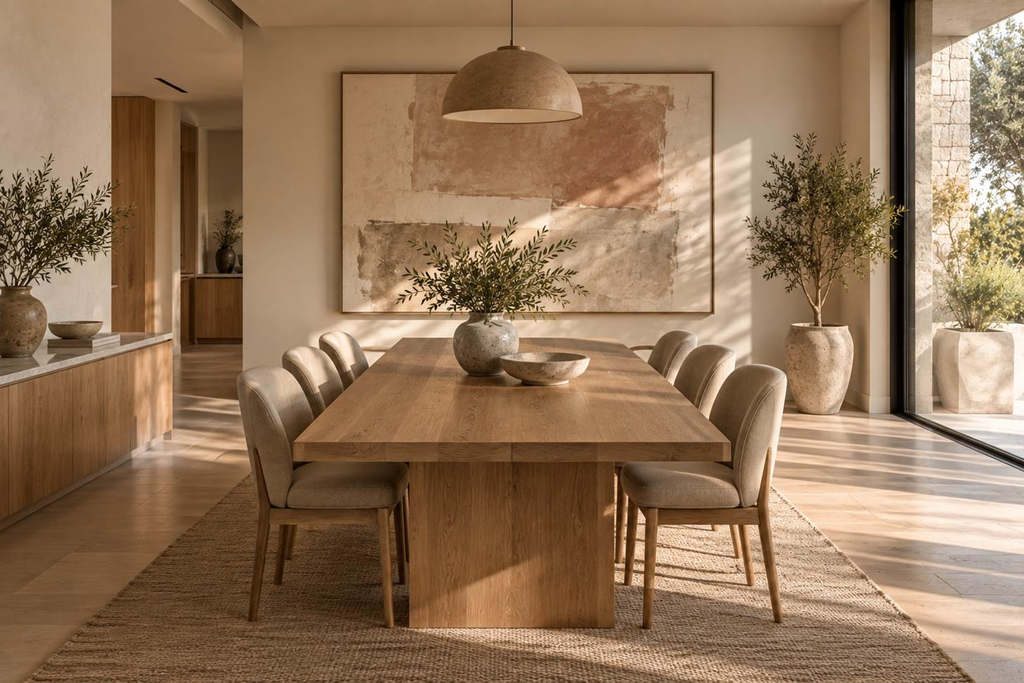
- Negative space around a piece is part of the composition. Art hung too close to the ceiling, or crowded by furniture and other objects, loses its impact. It needs room on the wall to actually be see
A practical approach to placement
Before anything goes on the wall, we usually lay the process out like this:
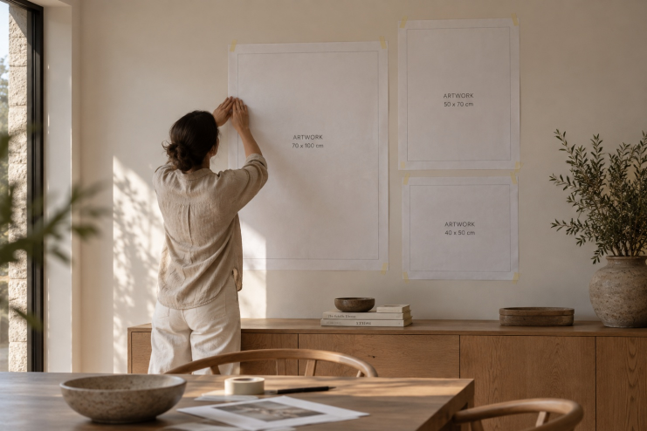
- Tape the piece’s dimensions onto the wall first, at a few different heights, and live with it for a day before committing to a hook.
- Photograph the room from the doorway — the angle you’ll actually see it from most — and check the placement in that photo, not just standing directly in front of it.
- If grouping multiple pieces, lay them out on the floor first and adjust spacing there, where changes cost nothing.
- Consider the piece in relation to what’s already in the room — a busy patterned sofa needs a calmer piece above it, not another busy one.
The takeaway
Art doesn’t need to be expensive or rare to change how a room feels. It needs to be placed with the same intention as everything else in the space — related to the furniture, considered at the height it’s actually seen from, and given enough room to be noticed.
| Follow King Protea Design for more — Julie shares design principles like this one, along with real project detail, on Instagram. instagram.com/kpd.designstudio |