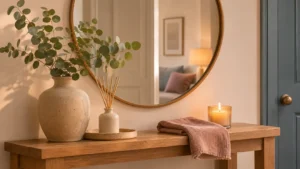
Before guests see your home, they sense it.
Scent is the first impression, and often the one they remember. It arrives before the eye has taken in a single detail, and it lingers after everything else has faded.
Yet in most homes, scent is an afterthought: a candle bought on impulse, a diffuser that came as a gift. We think it deserves the same intention as light and texture.
Scent is part of the design
Scent shapes how a room feels. A fresh note can make a hallway feel open and bright. A warmer one can make a living room feel settled and welcoming.
Just like light, it works best in layers. Not one fragrance pushed through the whole house, but a considered sequence that shifts gently as you move from room to room.
Think in zones
We plan scent around how each part of the home is used.
- The entrance: something fresh. Citrus, eucalyptus, green herbs. It says welcome without being heavy.
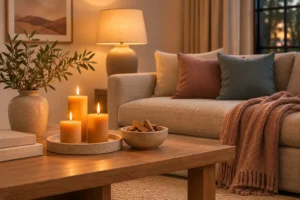
- Where you gather: something warmer. Cedar, beeswax, a little spice. These notes encourage people to stay.
- Where you rest: something quiet. Clean linen, a touch of lavender. Soft enough to fade into sleep.
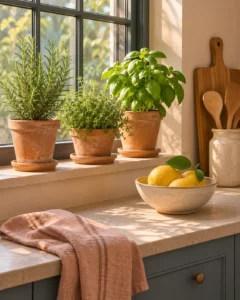
- The kitchen: let the cooking lead. Fresh herbs on the windowsill are often all you need.
Choose your formats
Different formats do different jobs.
Reed diffusers give a constant, gentle background. Candles are for evenings and occasions. Natural sources are the most subtle of all: fresh stems in a vase, potted herbs, a bowl of cedar, linen that has dried in the sun.
The most considered homes usually combine all three, with natural sources doing more of the work than people realise.
Keep one base note
The secret to a home that smells cohesive rather than confused is a single base note that runs through every room.
It might be cedar, or a soft musk, or a particular herb. Layer fresher or warmer notes above it in each zone, but let that base stay constant. Moving through the house then feels like one experience, not a series of separate ones.

Less is more
Scent should be noticed on arrival, then settle into the background.
If you can still clearly smell a fragrance ten minutes after walking into a room, it’s too strong. Use fewer reeds, smaller candles, and give rooms fresh air every day. Restraint is what makes scent feel refined.
Preparing for the season of hosting
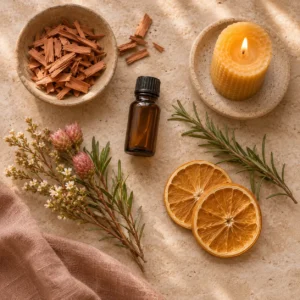
As the festive season approaches and homes fill with guests, a little planning goes a long way.
- Open the windows in the morning to give every room fresh air.
- Light candles about half an hour before guests arrive, so the scent has settled by the time they walk in.
- Keep the dining table unscented. Let the food lead.
- Never leave a burning candle unattended.
Your home already has a scent. The question is whether you designed it.