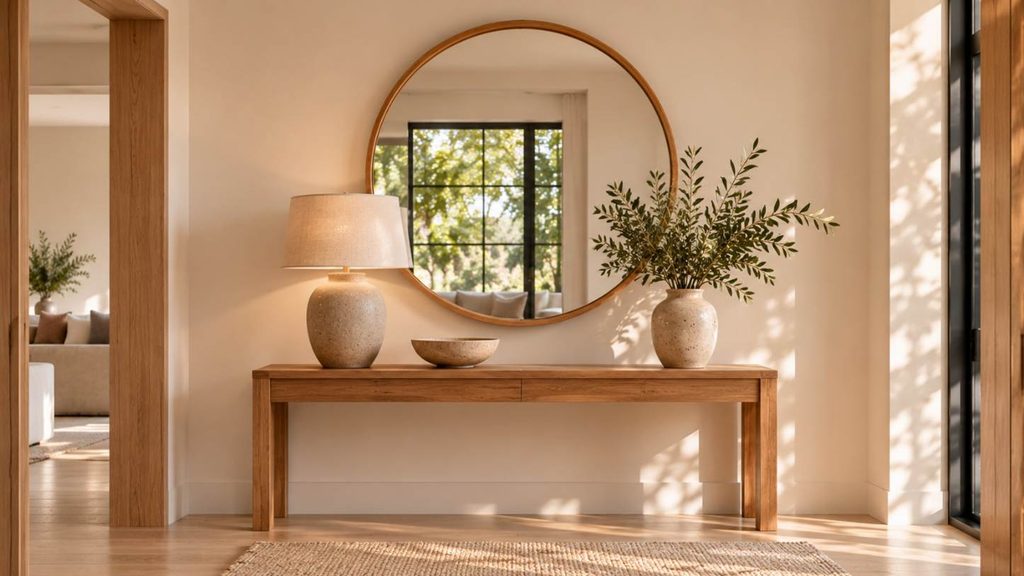
A mirror is only as good as what it reflects.
Mirrors are one of the most useful tools we have. They bring in light, add depth and open up tighter spaces.
Placed carelessly, they do the opposite. They double the clutter, catch the glare or reflect a blank wall back at you.
Decide what it should reflect, first
Before choosing a size or a frame, stand where the mirror will hang and look behind you. That is what the room will show back.
- Good reflections: a window view, a pendant light, an artwork, greenery.
- Reflections to avoid: a cluttered shelf, the television, the back of a door.
Bring in light, carefully
A mirror on a wall beside a window, at right angles to it, catches daylight and spreads it through the room without harsh glare.
A mirror directly opposite a window maximises light in darker rooms. Check it at different times of day, though. Strong afternoon sun can turn it into a source of glare.
Get the height and size right
- Hang a wall mirror with its centre at roughly 1.5m from the floor, close to eye level for most people.
- Above a console or sideboard, leave 15–25cm between the top of the furniture and the base of the mirror.
- Aim for a mirror around two-thirds of the width of the furniture below it.
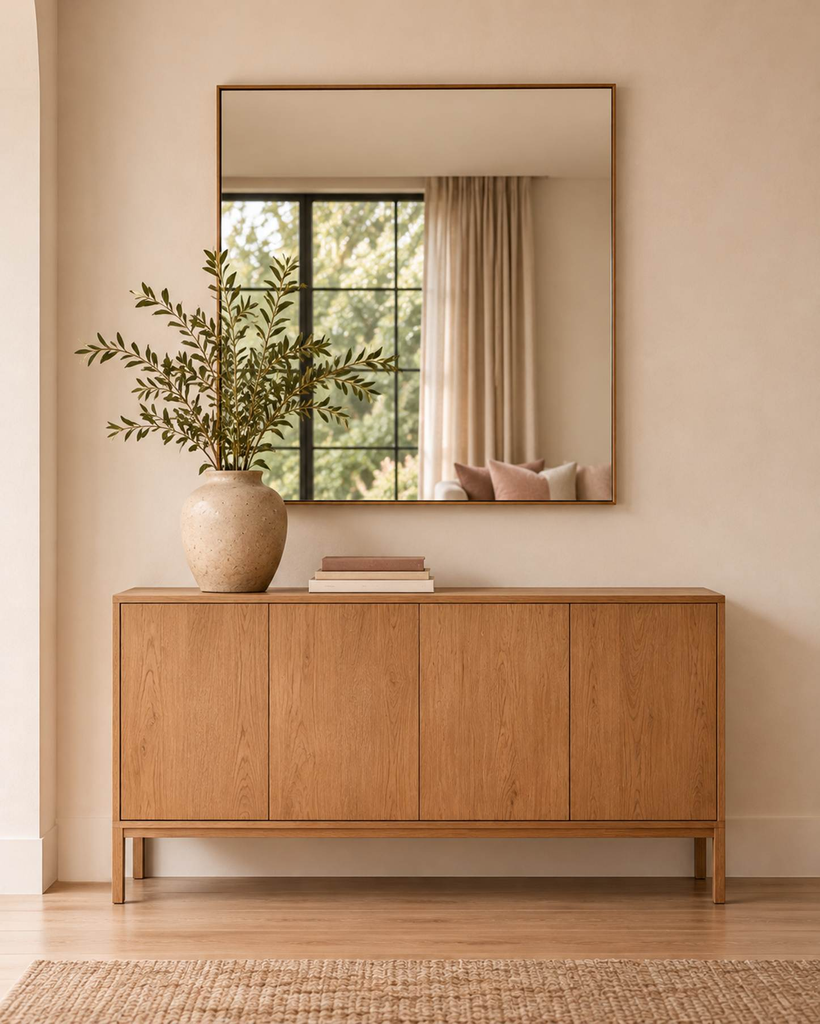
Use size to change a room’s proportions
A tall floor mirror leaned against a wall lifts a low ceiling. A wide horizontal mirror stretches a narrow room.
In a small entrance, one generous mirror does more than several small ones. It reads as calm and considered, rather than scattered.
Where mirrors work best
- Entrance: a practical last glance before you leave, and a softer first impression when you arrive.
- Dining room: reflects candlelight and pendants beautifully in the evening.
- Narrow passages: adds width and a sense of depth.
- Bedroom: inside a wardrobe door or on a side wall. Many people find a mirror facing the bed unsettling at night.
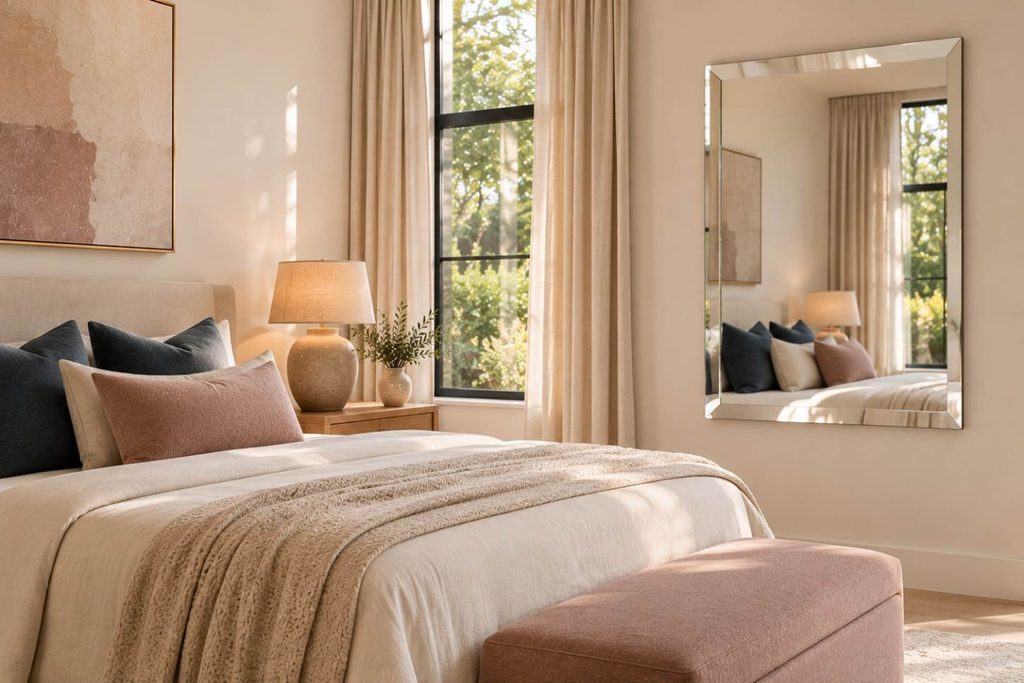
Let the frame belong to the home
The frame should feel like part of the room’s material story. Timber for warmth. A slim, dark metal for a quiet line. An unframed bevelled edge for calm simplicity.
Keep to one or two frame styles across the home. It is a small choice that supports the flow between rooms.
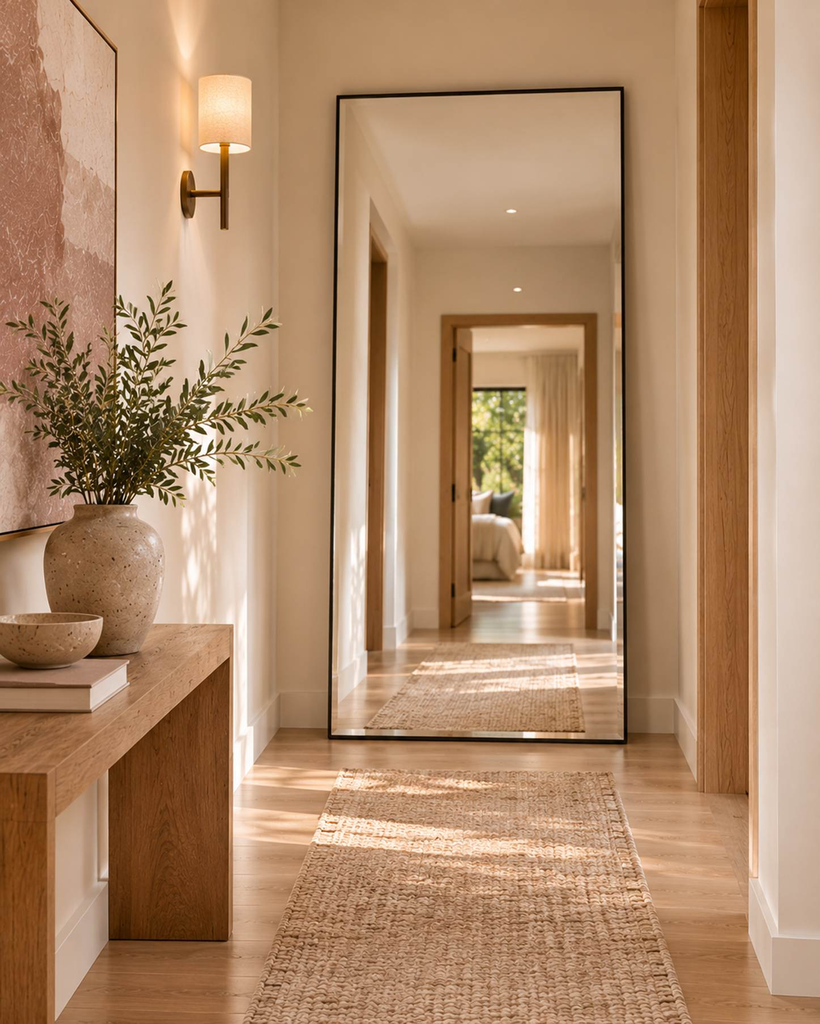
Chosen and placed with care, a mirror doesn’t draw attention to itself. It draws attention to the room.
See how we use mirrors to bring light into real homes on Instagram at @kpd.designstudio. Where in your home could a little more light make the biggest difference?