
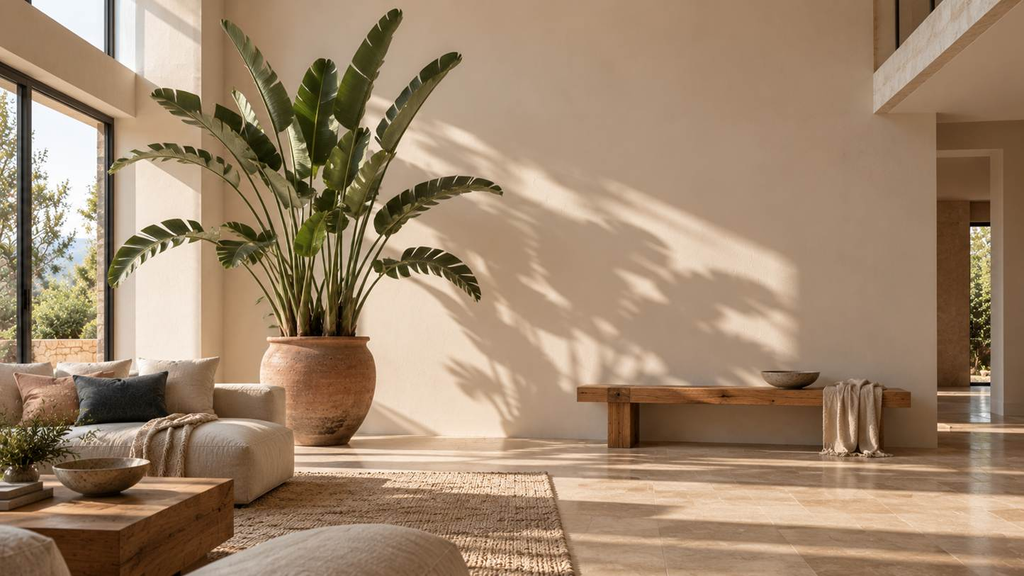
The best plant in a room is often the one you would notice even if it weren’t green.
Most homes treat plants as filler: a pot in a corner, a few on a shelf. They add life, but little structure.
Choose a plant for its form, and it starts to work like sculpture. A clear line. A silhouette. A shape against a quiet wall.
Choose form first
Look at the outline before you look at the leaves. Some plants have architecture built in.
- Strelitzia nicolai (wild banana): tall and upright, with broad paddle leaves. Beautiful in double-volume spaces and beside large windows.
- Olive tree: a soft, silvery canopy on a single trunk. Calm and quietly elegant.
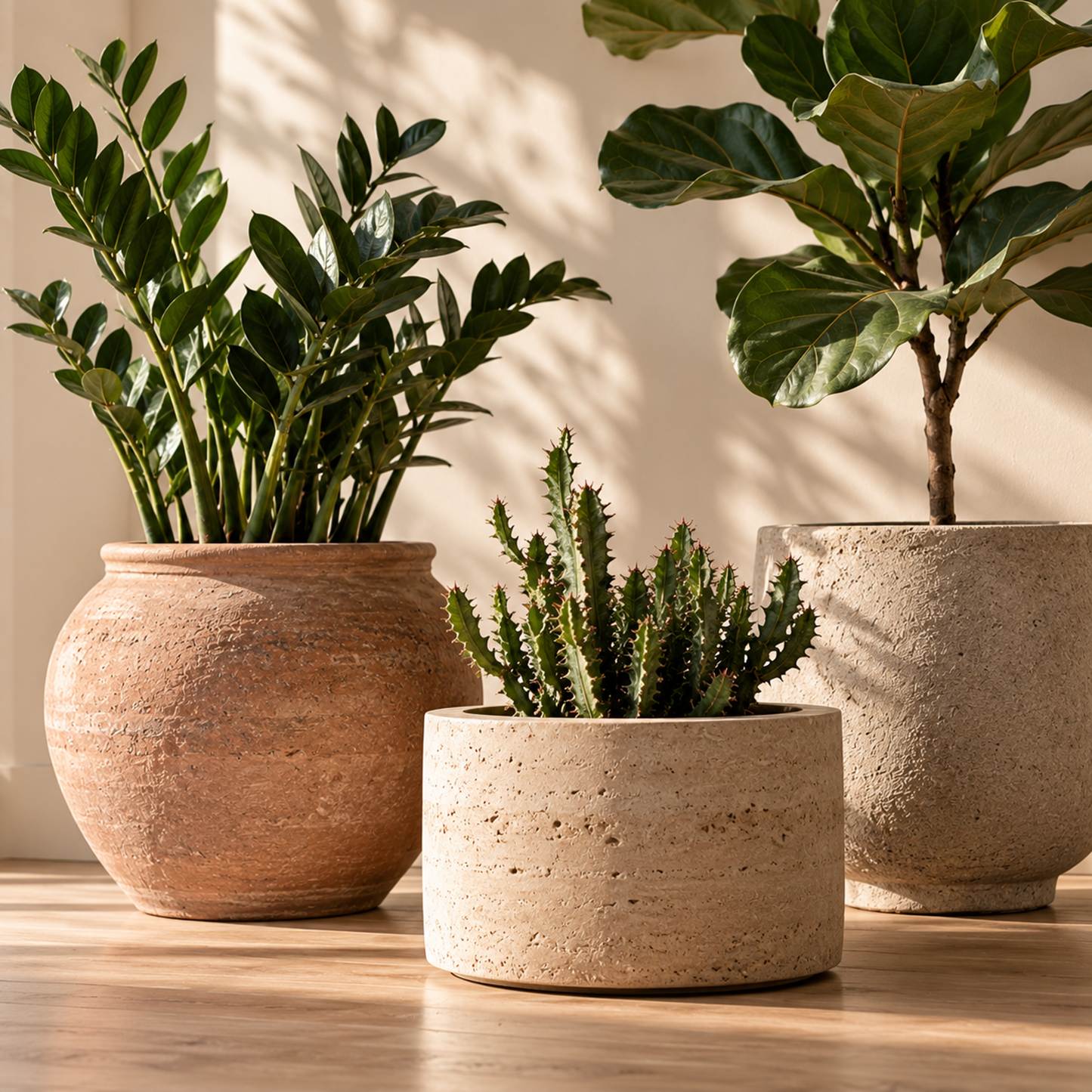
- Euphorbia ingens: sculptural and candelabra-like, and indigenous. Its sap is an irritant, so place it away from children and pets.
- Ficus lyrata (fiddle-leaf fig): a clear, tree-like silhouette once trained to a single trunk.
- Dracaena trifasciata (snake plant): vertical, graphic and forgiving.
- Zamioculcas (ZZ plant): glossy, arching stems that tolerate lower light.
Give it space, as you would an artwork
You wouldn’t crowd a sculpture with clutter. A plant deserves the same respect.
Set it against a plain wall. Leave clear floor around the pot. Let light fall on it from the side. Side light draws out its shape and casts a soft shadow, and that shadow is part of the effect.
One large plant over many small ones
A single plant at scale reads as a decision. Ten small pots read as a collection that needs managing.
If you want more greenery, group plants in odd numbers, keep to the same species or leaf tone, and vary their heights. They will read as one composition rather than many.
The pot is the plinth
Choose the vessel as carefully as the plant. Matte, natural materials work best: raw terracotta, honed stone, textured concrete or stoneware in a muted glaze.
Keep the pot simple so the plant’s silhouette leads. As a rule of thumb, a tall plant should stand around one and a half to two times the height of its pot.
Place it where it does some work
- Flank a window or doorway to frame the view beyond.
- Soften a corner where furniture can’t go.
- Anchor the end of a long passage, giving the eye a destination.
- Break up a long run of joinery or a large blank wall.
Always check the light first. A plant that struggles will never look sculptural. Most of the plants above prefer bright, indirect light; the ZZ and snake plant will tolerate less.
Care keeps the form
A sculptural plant needs a little maintenance to stay that way. Rotate it a quarter turn every few weeks for even growth. Wipe the leaves so they hold the light. Prune for shape, not just for size.
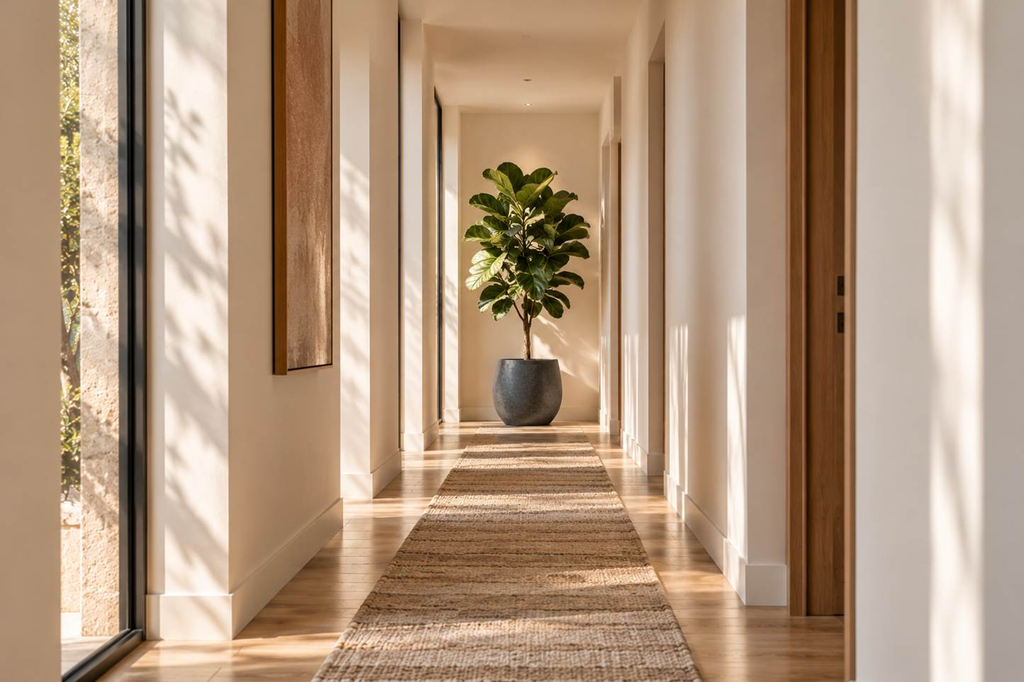
A plant chosen for its form brings the outdoors in with structure. It adds life to a room without adding clutter.
For more on how we bring greenery into real homes, follow @kpd.designstudio on Instagram. Which plant would you give pride of place?