Why layering, not decorating, is the right way to think about it
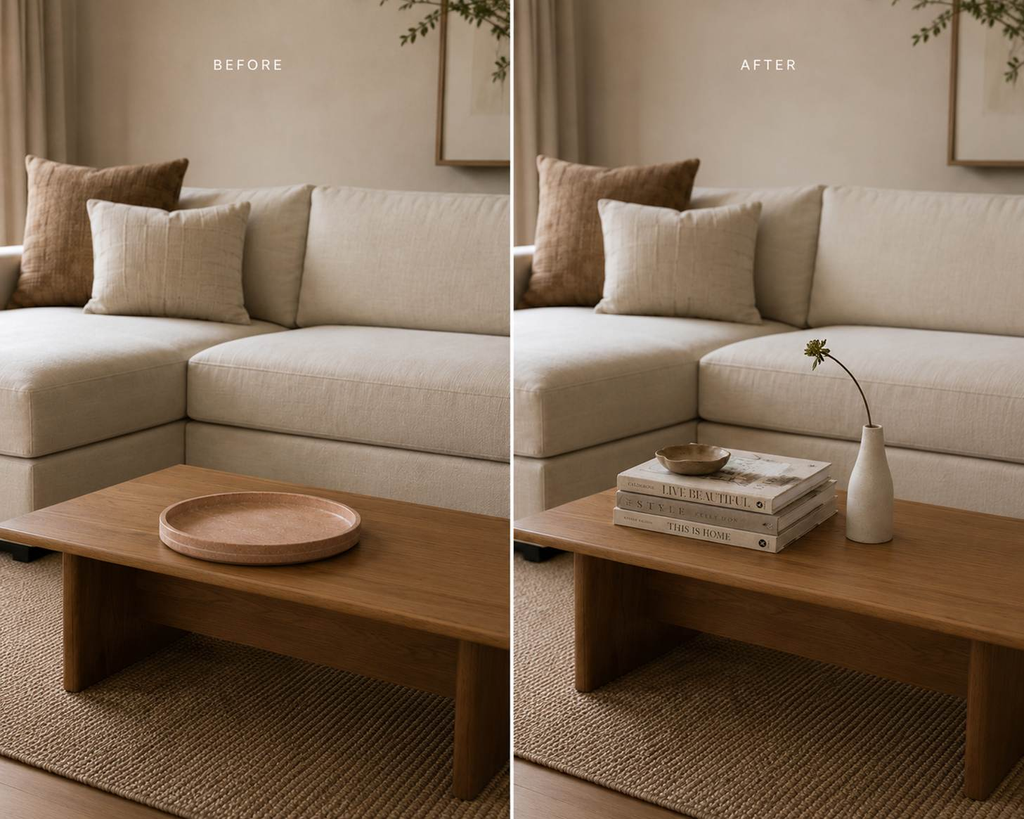
Styling a coffee table isn’t about adding things. It’s about layering them — building a small composition with height, texture, and a bit of restraint, the same way you’d think about layering a room.
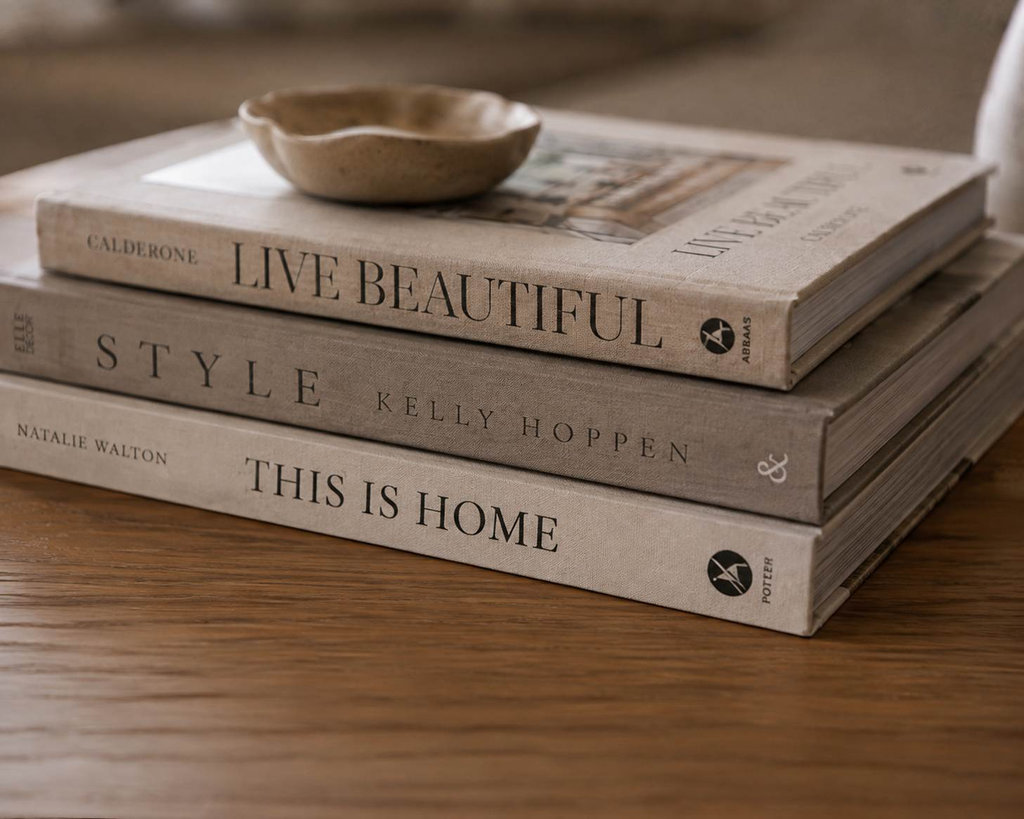
A well-styled table usually has three things working together, not five or six competing:
- A grounding object. Something with weight and presence — a substantial book, a tray, a bowl. This is the base the rest of the composition sits on, literally and visually.
- Something with height. A single stem in a narrow vase, a small sculptural object, anything that breaks the flat plane of the table. Height is what stops a tabletop from reading as a shelf.
- Something personal. An object that means something — not because it was bought to be styled, but because it belongs to the people who live there. This is the piece that stops the table from looking like it came out of a catalogue.
A simple structure that works almost every time
If you’re starting from scratch, this is the sequence we tend to follow:
- Start with a stack of two or three books, largest at the bottom. Choose books for their spine colour and texture, not just their titles.
- Add one grounding object on top of or beside the stack — a small dish, a paperweight, something with weight.
- Bring in a single botanical element. A stem or two in a slim vase does more than a full arrangement, and it’s easier to keep alive.
- Leave visible negative space. A styled table needs room to breathe as much as a styled room does — this is often the step people skip, and it’s the one that makes the difference.
- Step back and remove one thing. If the table still looks complete without it, leave it off.
What to actually avoid
- Symmetry that feels forced. A table styled like a mirror image of itself reads as staged rather than lived-in. Uneven groupings, in odd numbers, feel more natural.
- Anything too small to register. Tiny objects disappear on most coffee tables. If a piece needs to be picked up to be appreciated, it probably belongs on a shelf instead.
- Styling that ignores how the table is actually used. If people rest their feet there, or set drinks down, the styling needs to leave room for that. A table that can’t be touched isn’t functional — and function is part of the design, not separate from it.
The takeaway
A coffee table doesn’t need more objects. It needs the right three, arranged with a bit of height, a bit of weight, and something that’s actually yours. That’s usually enough to make a room feel finished, without it feeling staged.
| Follow King Protea Design for more — Julie shares styling principles, project details, and the reasoning behind KPD’s work on Instagram. instagram.com/kpd.designstudio |